

Greenhouse gas emissions (tCO2e)
- 7,381.02(PACTL)
- 12,321.15(PACTL WEST)
Scope 1 greenhouse gas emissions (tCO2e)
- 550.32(PACTL)
- 928.85(PACTL WEST)
Scope 2 greenhouse gas emissions (tCO2e)
- 5,822.40(PACTL)
- 7,423.30(PACTL WEST)
Scope 3 greenhouse gas emissions (tCO2e)
- 1,008.30(PACTL)
- 3,969.00(PACTL WEST)
Environmental Key Performance Data
Total energy consumption (tce)
-
1,294.13
(PACTL)
-
1,576.54
(PACTL WEST)
Total water intake (m3)
-
9,884.00
(PACTL)
-
38,906.00
(PACTL WEST)
Social Key Performance Data
-
Number of safety training sessions (Count)
57(PACTL & PACTL WEST)
-
Safety training coverage (Person-times)
110,383(PACTL & PACTL WEST)
-
Total duration of safety training (Class hours)
110,471(PACTL & PACTL WEST)
-
Airline clients NPS scores
83.02(PACTL & PACTL WEST)
-
Agency clients NPS scores
87.23(PACTL & PACTL WEST)
-
Complaint handling rate
100%(PACTL & PACTL WEST)
-
Employee care and assistance (Person-times)
10,483(PACTL & PACTL WEST)
Governance Key Performance Data
Proportion of external directors
- 89% (PACTL)
- 88% (PACTL WEST)
Proportion of female directors in the management team
- 22% (PACTL)
- 25% (PACTL WEST)

Climate Change
Carbon Accounting

PACTL has systematically carried out carbon emission data monitoring and statistics, covering three scopes: scope one (direct emissions), scope two (indirect emissions), and scope three (carbon emissions from sewage treatment).
Based on the current carbon accounting results and the national dual carbon target requirements, PACTL is gradually developing a carbon peak and carbon neutrality action plan that is in line with the operational status, and has divided the implementation path of phased emission reduction.
2024
-
Total Greenhouse Gas Emissions
19,702.17 tCO2e -
Including: Scope 1
1,479.17 tCO2e -
Scope 2
13,245.70 tCO2e
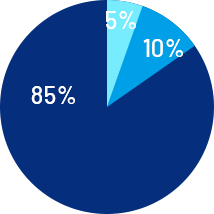
Energy comsumption carbon emission
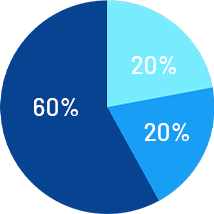
Energy comsumption structure of PACTL
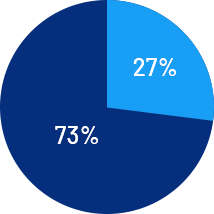
Energy comsumption structure of PACTL WEST
- Electricity
- Steam
- Diesel
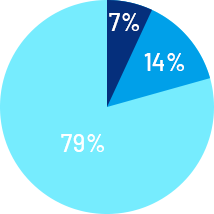
Carbon emission structure of PACTL
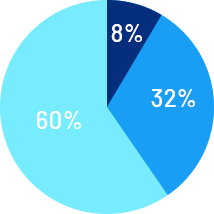
Carbon emission structure of PACTL WEST
- Scope 1
- Scope 2
- Scope 3

Environmental Protection
Pollution Governance

PACTL continuously focuses on pollution control, ensuring that it consistently meets and even exceeds the regulations and standards set by the national and local authorities. Through this series of systematic measures, we are steadily advancing our pollution prevention and control efforts, effectively managing environmental risks, and actively fulfilling our corporate environmental responsibilities.
2024
-
Total waste disposal fees
(RMB million)2.00 -
Non-Food Waste Disposal Fee
(RMB million)1.10 -
Food Waste Disposal Fee
(RMB million)0.04 -
Hazardous Waste Disposal Fee
(RMB million)0.13 -
Non-Hazardous Industrial Solid Waste Disposal Fee
(RMB million)0.05 -
Other Categories of Waste Disposal Fees
(RMB million)0.68
Our Governance
- Optimize the operation process to reduce wastewater generation at the source
- Conduct inspections on rainwater and sewage discharge and pipelines to prevent mixed discharge of rainwater and sewage
- Regularly perform preventive maintenance and upgrades on pipeline systems and treatment facilities to prevent leaks and ensure no accidental discharge without treatment
- Strictly implement waste sorting at the source to ensure clear separation and compliant temporary storage of hazardous and general waste
- We establish long -te r m coope ratio n with qualified treatment companies and implement full traceability closed-loop management for all types of waste (especially hazardous waste), ensuring their final compliant disposal or resource utilization. The compliance disposal rate of hazardous waste reaches 100%

Resource Efficiency
Energy Conservation

We adhere to the principle of prioritizing energy conservation and adopting green alternatives . We implement resource - efficient utilization and low-carbon operation in multiple dimensions. Through energy-saving technological renovations and management optimizations, we strengthen the operation management of high-energy-consuming equipment and conduct regular energy efficiency evaluations.

-
Vehicle Fuel-to-electric Conversion
Actively promoting the improvement of vehicle exhaust emissions, implementing the "fuel-to-electric" conversion plan for forklifts, reducing exhaust emissions in the cargo station area. At present, the terminal has a total of 81 electric forklifts and 18 diesel forklifts , while PACTL WEST has a total of 56 electric forklifts and 18 diesel forklifts.
-
LED Lighting
In 2024, PACTL WEST replaced 384 incandescent lamps with LED energy-saving lamps (using 80-watt LED lamps to replace 400-watt metal halide lamps).
-
Leasing Electric Forklifts
In 2024, PACTL operated 33 leased electric forklifts as agents to promote vehicle cleanliness.
-
Photovoltaic Power Generation Project
PACTL completed a 50kW distributed photovoltaic power generation project before 2010, and now plans to carry out an overall upgrade and technological transformation. PACTL WEST has included photovoltaic power generation projects in the "15th Five Year Plan"

Resource Efficiency
Water Conservation

Regarding the goals and planning for water resources, our core objective is to achieve water conservation and efficient utilization.
PACTL will implement systematic management, continuously optimize water usage intensity, and steadily enhance the level of water recycling. In daily operations, we actively conduct water conservation education and publicity to enhance the water conservation awareness of all employees. We also conduct regular inspections and preventive maintenance of water supply networks and water-using equipment to eliminate "leakage" phenomena.
2024
-
The total water
4,879 tons
consumption -
Water consumption
10.66
intensitykg/m2(PACTL WEST)
-
Water consumption
4.04
intensitykg/m2(PACTL)
-
The total water
8.00
consumption intensitykg/m2
Environmental Policy

